
Why the Best Art Decision You Will Ever Make Starts With Your Own Eyes
Why the Best Art Decision You Will Ever Make Starts With Your Own Eyes
The moment you stop collecting for approval and start collecting for connection, an entirely different art experience unfolds.
Art collectors often ask friends, family members, coworkers, or online strangers a seemingly harmless question.
"Do you like this painting?"
From a psychological perspective, that simple question can influence purchasing decisions far more than most people realize. Research in behavioral science shows that humans naturally seek social validation when making choices involving uncertainty, money, and personal taste. Art collecting involves all three.
The result is that many collectors end up walking away from artworks that genuinely moved them because someone else failed to share the same emotional response.

The Painting That Spoke to You First
When you first encounter a piece of art, your brain begins processing information within milliseconds. Visual regions interpret color, shape, texture, and composition, while emotional centers help create an immediate personal reaction.
Neuroscientists studying aesthetic appreciation have found that artwork can activate brain networks associated with emotion, memory, meaning, and reward. This helps explain why two people can stand in front of the same painting and experience completely different feelings.
One person may see a masterpiece.
Another may see a canvas they would never hang in their home.
Both reactions are valid.
Art appreciation exists as one of the most individual forms of human experience.
Why Other People's Opinions Feel So Powerful
Human beings evolved as social creatures. Throughout history, belonging to a group increased survival chances. Modern psychology continues to demonstrate how strongly social influence affects decision-making.
Studies on social conformity show that people frequently modify judgments after hearing the opinions of others, even when their original impressions were accurate and authentic.
Art collecting creates a perfect environment for this effect.
The purchase often involves a significant financial commitment. The artwork becomes part of a living space. The collector hopes to make a wise choice. These factors encourage many people to search for reassurance.
A friend may dislike abstract art.
A spouse may prefer landscapes.
A coworker may favor traditional realism.
Their preferences reflect their personal experiences, tastes, memories, and values.
Your collection belongs to your story.
The Most Memorable Collections Follow a Different Rule
Visit exceptional private collections around the world, and a fascinating pattern emerges.
The strongest collections rarely look like they were assembled by committee.
They reflect the personality of the collector.
Some feature bold contemporary abstracts.
Others celebrate vintage photography.
Some revolve around emotional storytelling.
Others focus on color, texture, or cultural history.
What makes these collections memorable is authenticity.
Collectors who trust their instincts often build collections with greater emotional value and long-term satisfaction because every piece represents a meaningful connection rather than public approval.
The Science of Emotional Connection and Art Ownership
Psychological research consistently demonstrates that emotional attachment increases perceived value.
When collectors feel personally connected to an artwork, they tend to experience greater enjoyment from ownership. The artwork becomes associated with memories, aspirations, life milestones, and personal identity.
This phenomenon helps explain why a painting purchased because it genuinely resonated often remains cherished for decades.
The emotional reward extends far beyond the transaction itself.
Every glance becomes a renewed experience.
Every viewing reveals something different.
Every year adds another layer of meaning.
That relationship cannot be measured through polls, comments, or outside opinions.
What Smart Collectors Ask Instead
Experienced collectors often replace one question with another.
Instead of asking, "Do other people like this?"
They ask:
Does this artwork make me feel something?
Would I still love this piece years from now?
Can I imagine living with it every day?
Does it reflect something meaningful about who I am?
These questions direct attention toward personal engagement rather than social validation.
The answers often lead to more satisfying collection decisions.
When Expert Advice Helps and When It Doesn't
Professional guidance serves an important role in art collecting. Art advisors, gallery professionals, curators, and appraisers can provide valuable information regarding provenance, authenticity, conservation, market history, and artistic significance.
These insights support informed decision-making.
Personal taste remains a separate matter.
No expert can determine which artwork creates a meaningful emotional response inside another person's mind.
The collector remains the final authority on that experience.
The Collection That Tells Your Story
Every artwork you acquire becomes part of a visual autobiography.
It reflects your interests, your experiences, your curiosity, and your perspective on the world.
Friends may admire your choices.
Family members may have different preferences.
Online commentators may offer endless opinions.
The artwork ultimately hangs on your wall, lives in your space, and becomes part of your daily life.
Dear collector, trust the reaction you felt before anyone else entered the conversation.
Art collecting thrives when guided by curiosity, emotional connection, and personal meaning. The most rewarding collections grow from genuine appreciation. Years later, those are the pieces that continue to inspire conversation, spark memories, and bring joy each time you walk into the room.
Your eyes discovered the artwork.
Your heart responded first.
That response deserves a place in the decision.
About The Author
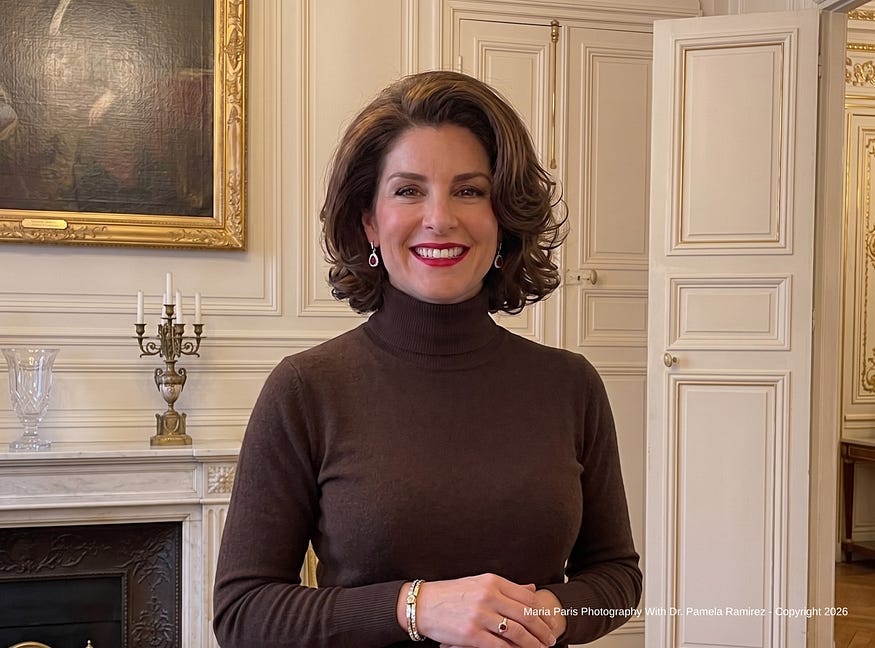
Dr. Pamela Ramirez, PsyD, PhD, MD, is a scientist and researcher on SciProfile with ORCID (Open Researcher and Contributor ID) 0000–0002–3963–6650. She is a psychologist, psychiatrist, and PhD holder in human behavior, as well as an author, writer, and internationally established artist known as QueenNoble. She is also a member of the Europeana Network & Foundation, supporting the preservation of culture and heritage.
Through her writing, Dr. Ramirez helps people improve their lives in mind, body, and finances. She is the author of several books, including The Chemistry of Productivity, Quarantine: The Challenges During Quarantine and How to Keep Our Sanity, The Signs She Left, The Eyes Behind Her, How to Sell Your Art Without A Gallery, Menka, Live Minimal, and more.